
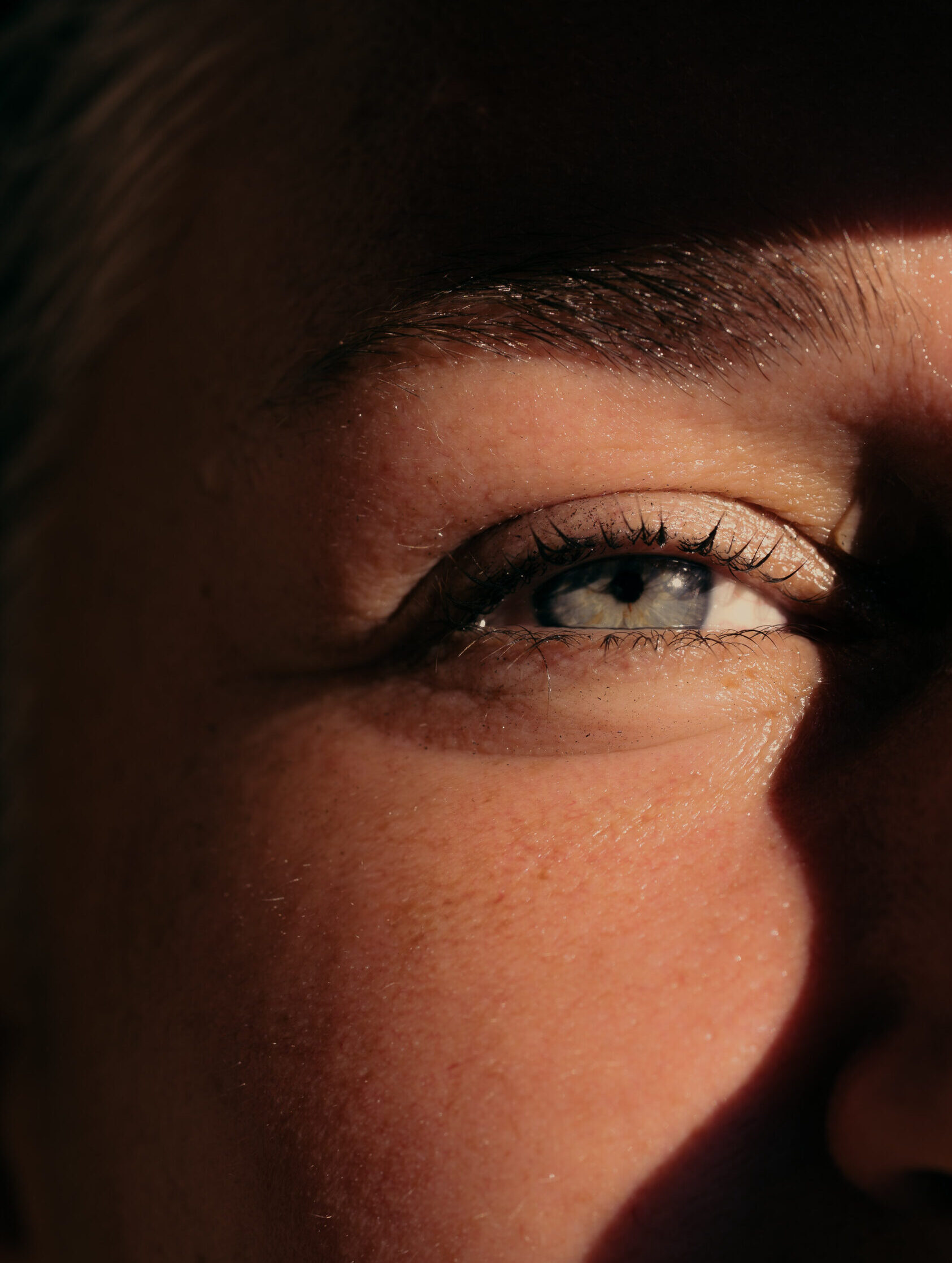
Micro to Macro
The problem might not be what you’re looking at—it might be the scale from which you’re looking at it.
curated, wild, intuitive, and woven with care
READ THE JOURNAL
The problem might not be what you’re looking at—it might be the scale from which you’re looking at it.
READ THE JOURNAL
You’ve been revising the same paragraph for three days. The words are fine. The structure is fine. But something feels off, and you can’t name it. So you keep adjusting. Swapping verbs. Moving commas. Reading it aloud for the twentieth time. The friction builds. The paragraph still doesn’t work. The problem might not be what you’re looking at—it might be the scale from which you’re relating to it. Photographers call this moving from micro to macro—the ability to shift between scales of attention to explore what each vantage point reveals.
Change the scale, change what becomes visible.
The skill can be trained.
A camera stays in one place. A lens moves the world.
Stand in the same spot with a wide-angle lens, and the frame inhales the room—the geometry of space, the relationships between objects, and the choreography of light across surfaces. Switch to a telephoto lens without moving your feet, and distance folds. Mountains move closer to buildings. Background touches foreground. Same position. Different contract with scale.
The photographer learns quickly: distance is where the camera stands. Scale is what the lens decides.
Wide glass holds the world generously, letting many stories exist at once in the frame. Telephoto glass collapses distance until separate layers touch and rearrange their hierarchy. Macro glass turns a dewdrop into a planet, the veins of a leaf into a river system. None of these are tricks. They’re scale decisions made through glass.
Field of view: the amount of a scene the frame can hold at once.
Your eye works the same way, except you control the zoom. The fovea—the small central region of your retina—provides sharp vision but only covers about two degrees of your visual field.1 Roughly the size of your thumbnail held at arm’s length. Everything else exists in peripheral vision, which tracks context and motion but can’t resolve fine detail.
You’re constantly choosing where to direct acuity and where to allow blur.2 The skill isn’t seeing everything at once. Learning to shift deliberately between micro to macro is a capacity I explore further in Where Perception Begins.
Photography trains this muscle faster than almost any other practice. Because the feedback is instant.
Here’s what most people miss when they’re stuck: creative blocks exist at different scales, and each scale requires a different solution.
Micro scale problems live in the details. The word choice. The brushstroke. The specific edit you’re attempting right now. These need close attention and technical adjustment. If the problem is micro, you stay close and refine.
Meso scale problems live in the structure. How the elements relate to each other. Whether the sequence makes sense. Pacing—how quickly or slowly you stay with a frame or idea. Middle distance: the space between foreground and background. The individual parts might be perfectly crafted, but they’re organized wrong.
Macro scale problems live in the trajectory. Whether this project serves what you’re actually building. Whether the work connects to the larger contribution you’re trying to make over years, not just this moment.
Most frustration comes from applying the wrong scale of solution to the problem.
A writer stalls on a chapter. Days spent adjusting sentences. The problem isn’t the sentences—it’s that the chapter serves a structure that no longer fits the book. The micro-level craft is fine. The meso-level architecture needs rebuilding. But the writer stays locked at the wrong scale, polishing language when the real work is excavation.
You remain stuck because you’re looking at the wrong scale.
Photographers develop an instinct for this through what I call shifting perspective—learning to feel when they’re zoomed in too tight to see shape or pulled back too far to feel presence. The camera gives immediate feedback: change the lens and see what becomes visible.
You can train the same instinct without a camera.
Ask: What happens if I zoom out?
Step back from the sentence to the paragraph, from the paragraph to the section, from the section to the whole project, and from the project to your body of work across years. Does the problem shift? Does something that felt unsolvable suddenly seem obvious from a different altitude?
Ask: What happens if I zoom in?
Maybe you’re stuck in abstract questioning about whether the whole project matters when actually you just need to fix the pacing of one sequence. Get closer. What specific element isn’t working? What texture are you trying to capture that keeps dissolving?
Ask: Where am I most comfortable, and is that the right scale for this problem?
Some people default to altitude. They think in patterns, long arcs, big concepts. They see structure easily but struggle with presence, with what’s happening in the immediate moment. Others default to proximity. They feel everything intensely, notice every detail, but lose perspective. They can’t tell whether this moment matters or whether it’s just one frame in a much longer sequence.
Neither position is wrong. Both are incomplete without access to the other.
The right scale stays unfixed. It shifts depending on what needs to be seen.
Here’s the exercise photographers do instinctively, and you can practice deliberately:
Next time you’re stuck, stop working on the problem and start diagnosing the scale.
Write down three versions of the question you’re asking:
Then notice: which question makes the problem suddenly feel solvable?
That’s your scale.
Clarity doesn’t live at one perfect scale. It lives in the ability to move between micro to macro with intention. To recognize when you’re zoomed in too tight to see the shape of something, or pulled back too far to feel its texture. To shift deliberately rather than stay anchored at the scale where you’re most comfortable or most afraid.
Scale is mechanics. And the mechanics can be trained.
Most creative frustration comes from staying at one scale too long. You rewrite sentences when the issue lies in pacing, or you blame pacing when the issue lies in orientation. You question orientation when the issue lives in the frame itself.
The camera trains the body to feel that shift through repetition. The stakes reveal themselves without argument, because the feedback loop is visible, instant, and non-negotiable.
Then the same principle begins appearing everywhere else. In how you think about a project, how you interpret a conversation, and how you assess whether you’re moving toward something that matters or just reacting to what is in front of you.
The camera stays still. The lens moves the world. And once you learn to shift between micro to macro scales, you realize clarity was never about standing in the right place. It was about knowing when to change the glass. The muscle is the choice.
This essay explores one perceptual principle from my upcoming book, The Art of Seeing. The book examines the ways photography trains the eye to shift perspective, recognize patterns, and see relationships others miss—capacities that extend far beyond the camera.
Photography teaches perception at velocity because the feedback is immediate. You point the lens, you see the result, and you adjust. Over time, these adjustments become instinct. The instinct becomes literacy.
The book is designed for anyone who wants to see more clearly—whether you’re a creative professional, a strategist, a founder, or someone trying to think with more precision in an algorithmically fragmented world.
Want to know when the book launches? Join the announcement list here and get the first chapter free when it’s released.
Read more about The Art of Seeing methodology by exploring more of The Journal.
x

Your email address will not be published. Required fields are marked *
show comments
back to the post index
Next ENTRY
Previous ENTRY
keep reading


Leave a Reply